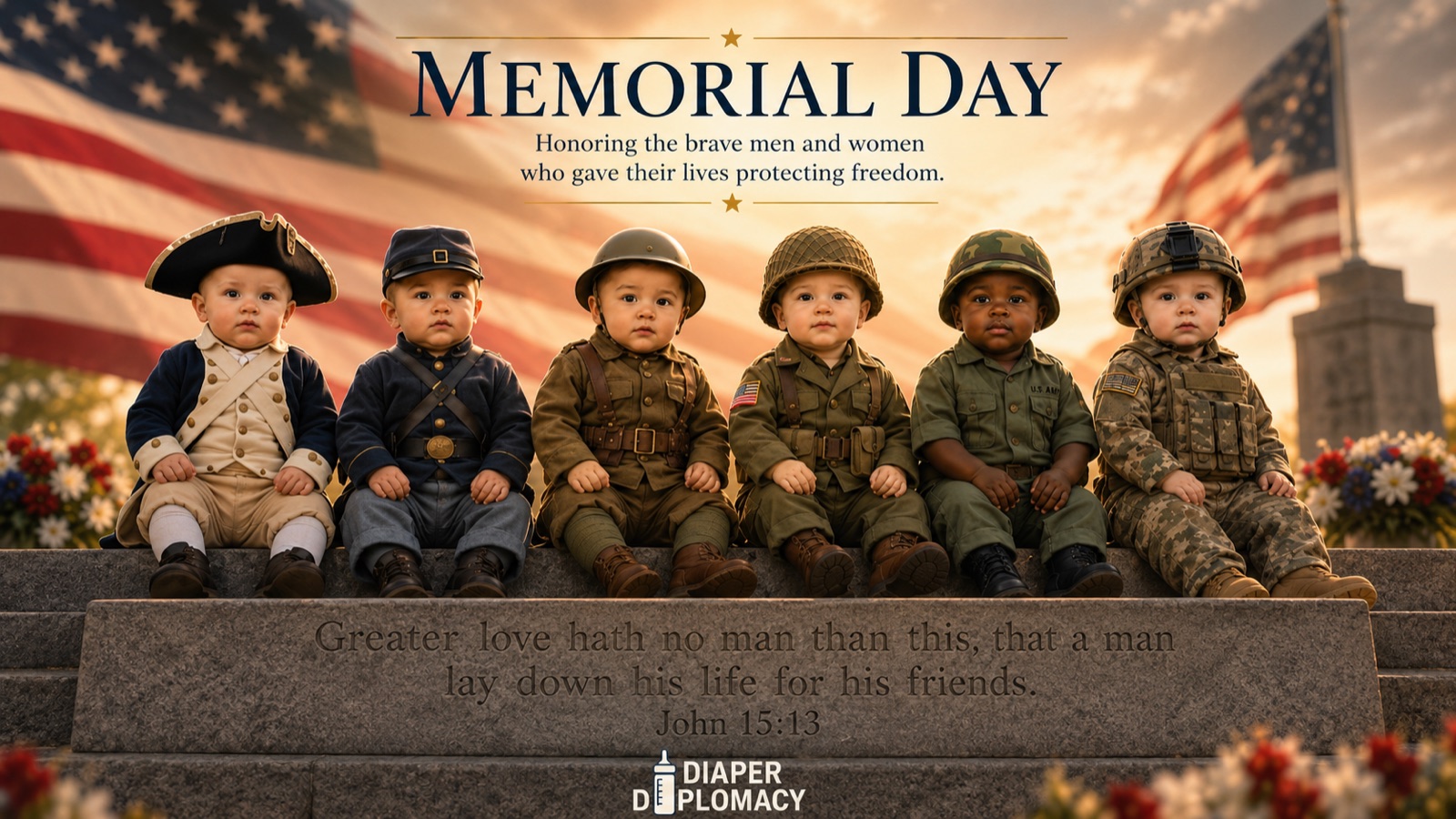
 Memorial File
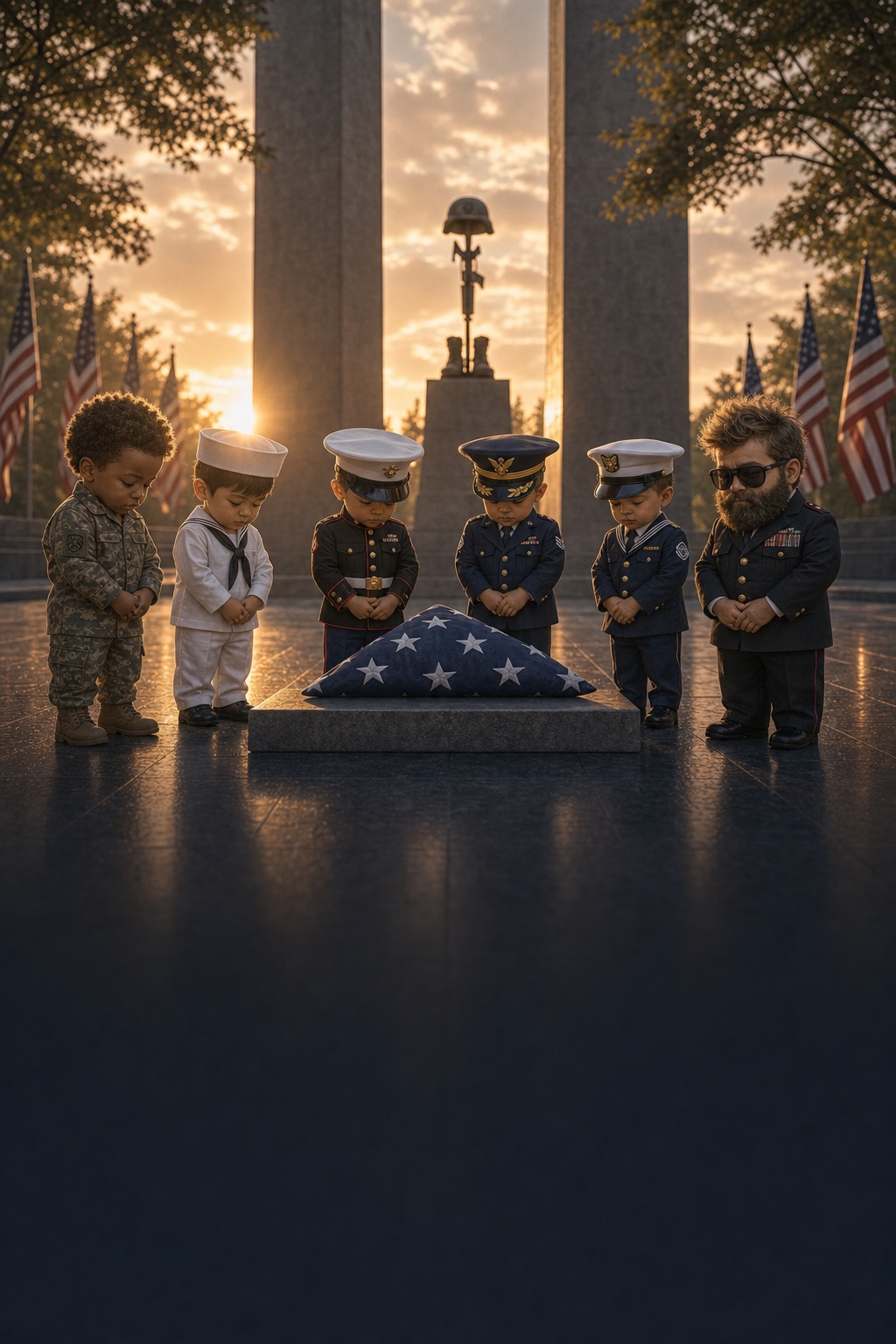
Memorial File
Those Who Gave All
The first stop is remembrance. Everything else reports after that.
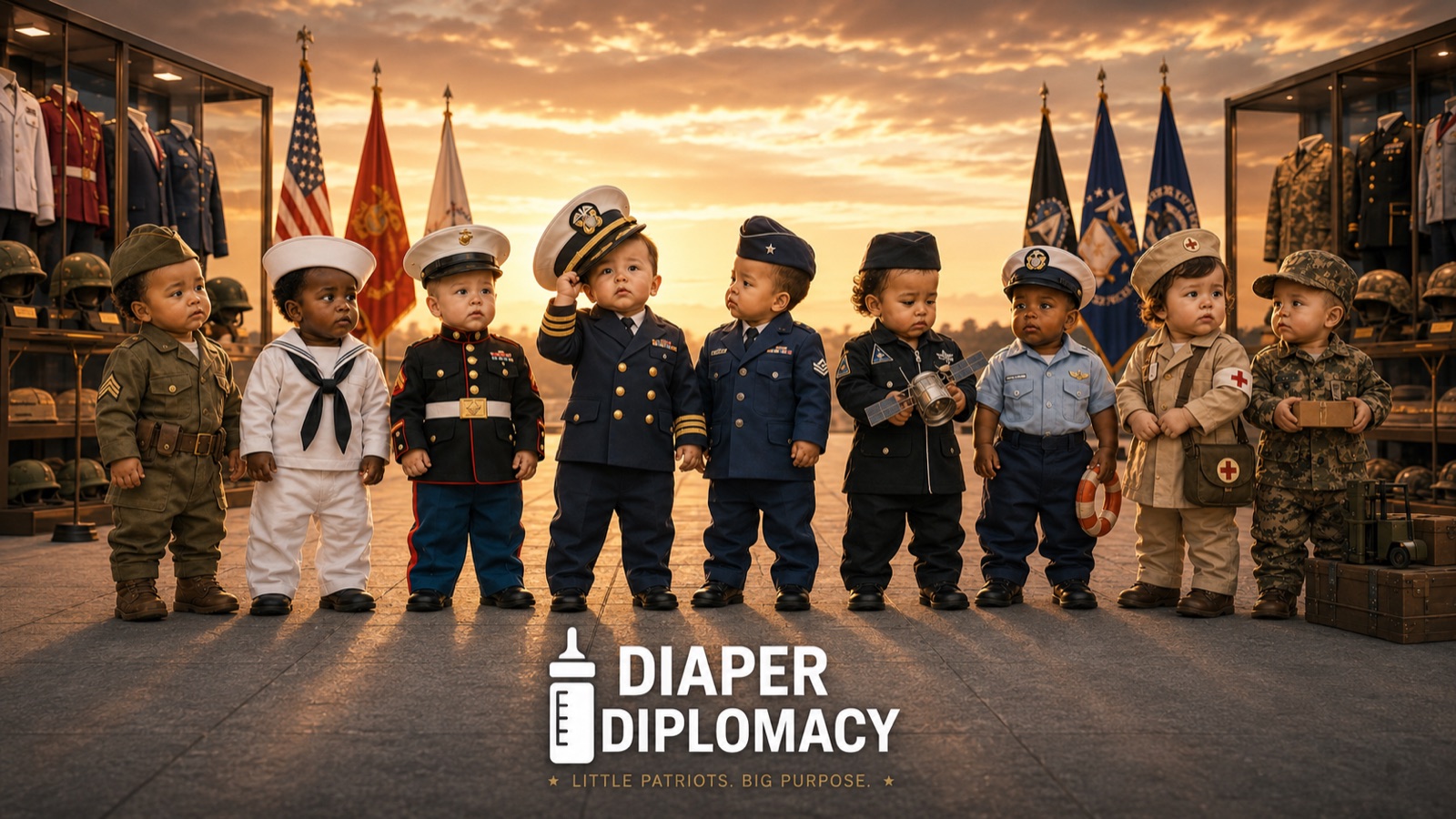
A Diaper Diplomacy tribute to the Americans who served, the families beside them, and the generations who kept watch before any briefing room got a microphone.
Before the briefing gets loud, this page starts with remembrance: the Americans who did not come home, the families who carry them, and the cost behind every uniform in this file.

Each tab carries the founding story, service history, era artwork, and branch-matched gear where available.
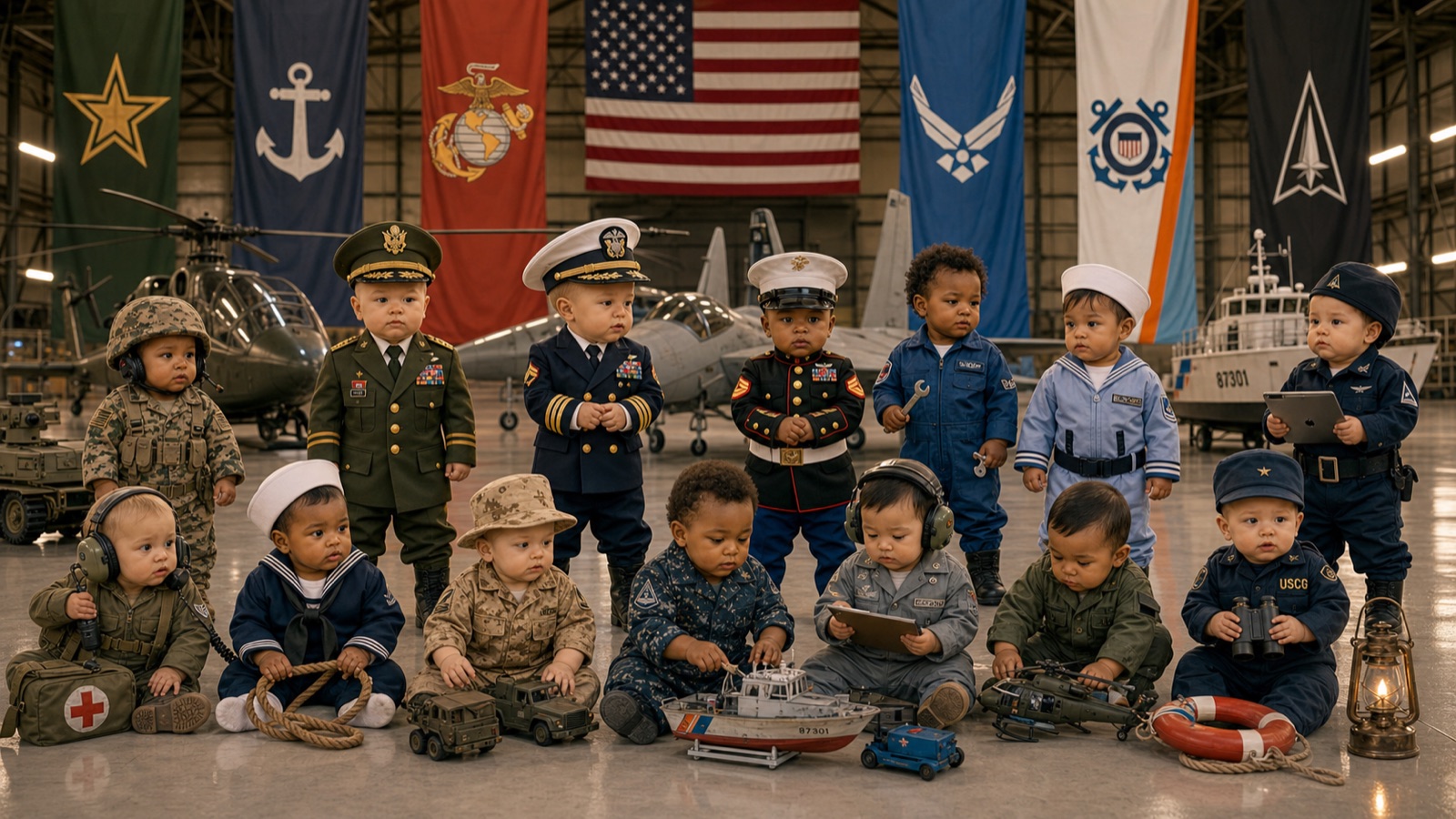 Gear Preview
Field Locker
Branch gear reporting for duty.
Mugs, desk gear, and field-office morale. Procurement still claims this is mission-essential.
Shop Shelf
Gear Preview
Field Locker
Branch gear reporting for duty.
Mugs, desk gear, and field-office morale. Procurement still claims this is mission-essential.
Shop Shelf
Every generation inherits a different uniform, a different enemy, and the same hard bargain: leave home, stand the watch, and protect a country that keeps asking ordinary people to do extraordinary work.
The first stop is remembrance. Everything else reports after that.
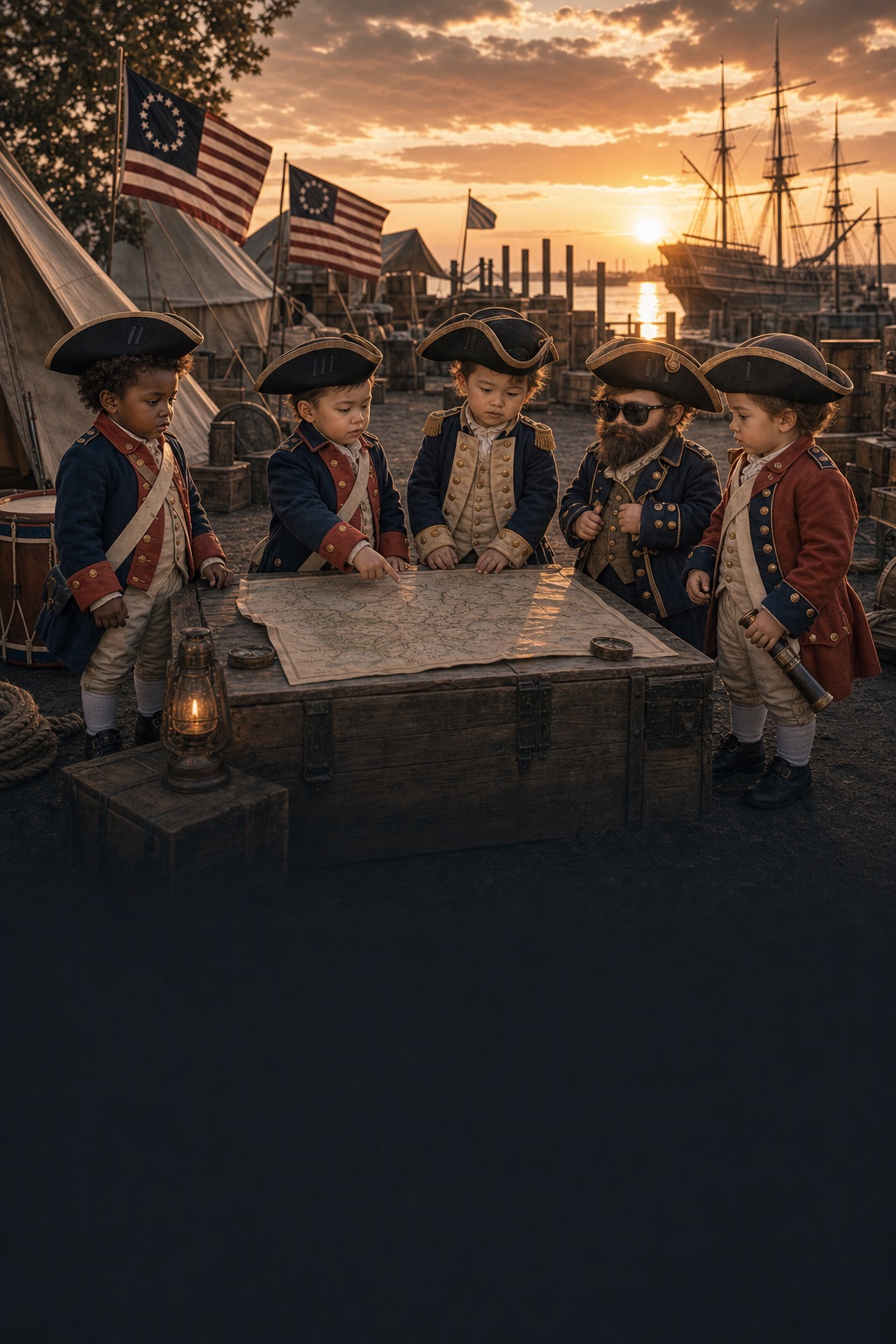
The first American service files started before there was a country to file them under.
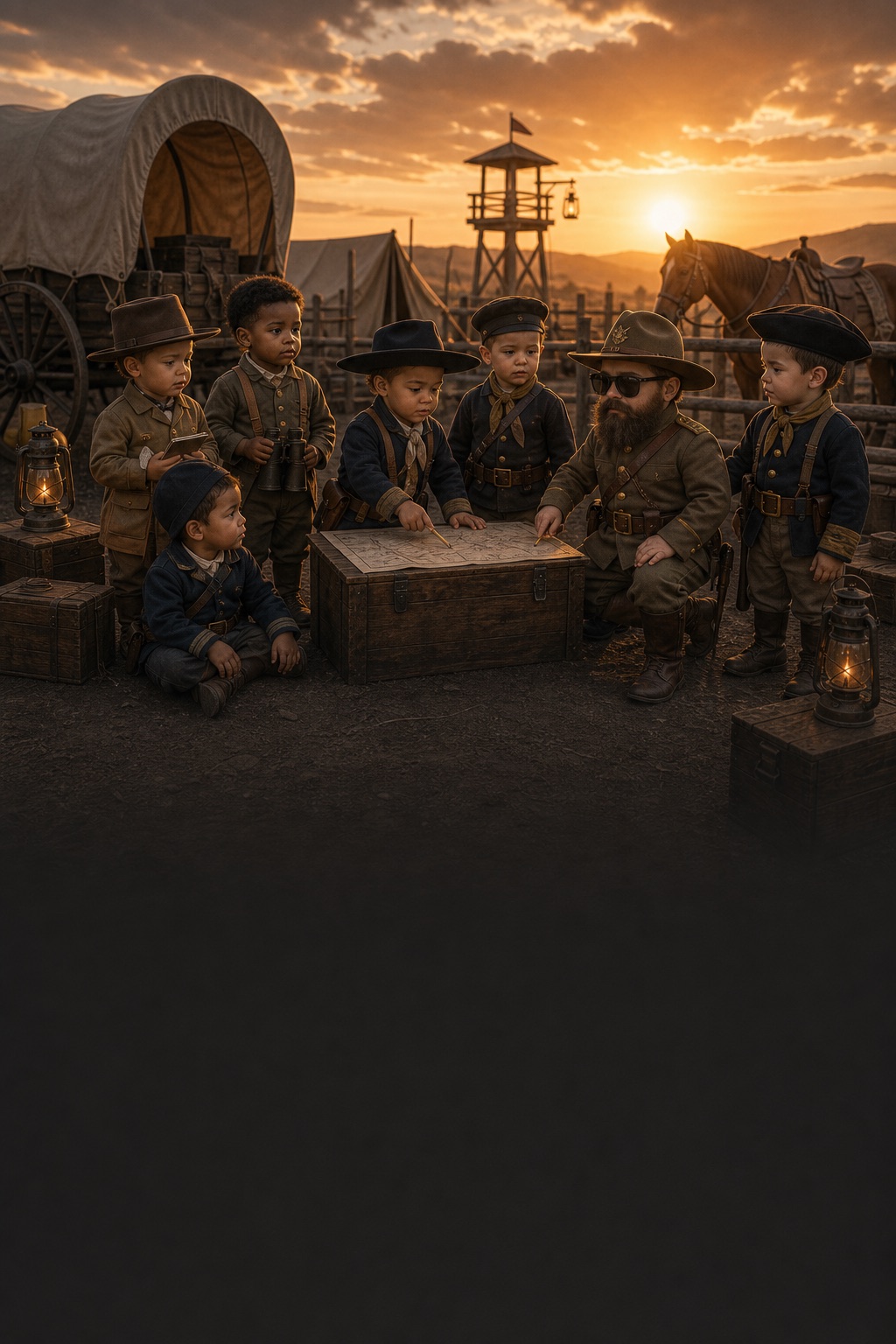
Generations of enlisted service carried the country through hard miles and harder assignments.
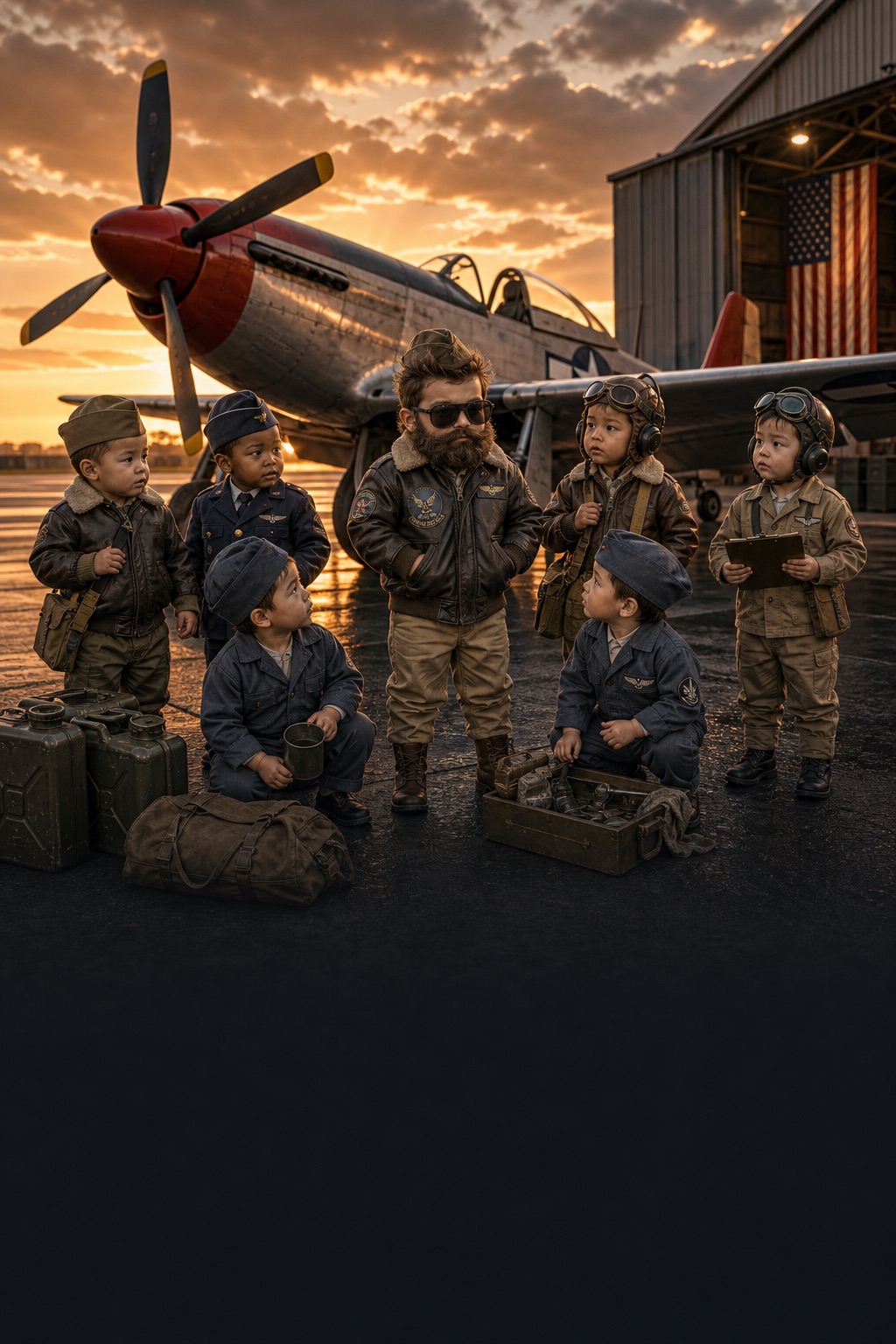
Skill, courage, and discipline pushed through enemy fire and home-front prejudice.

Freedom now depends on people protecting things most of us never see.
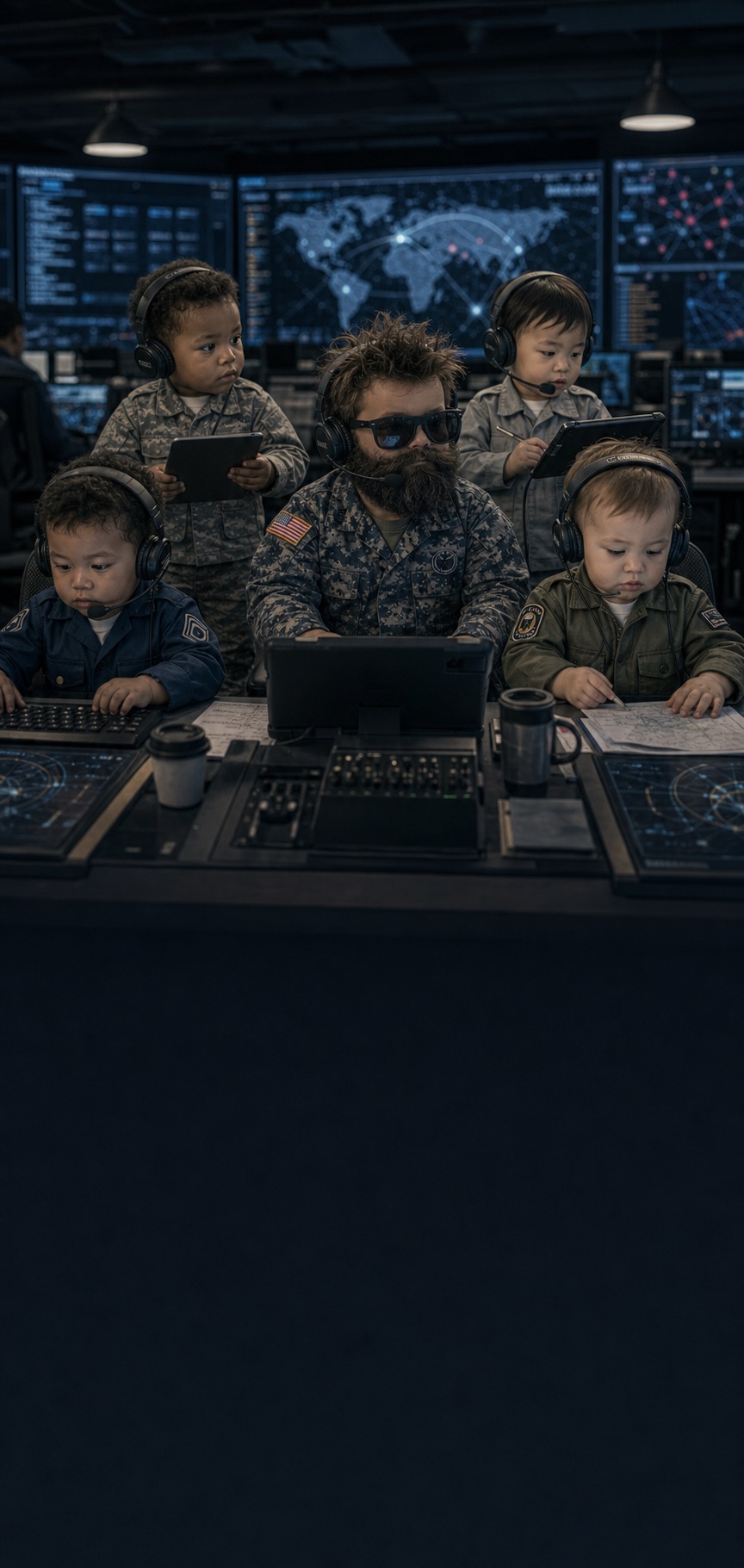
Modern service stretched across deployments, cyber rooms, relief missions, and family calendars.
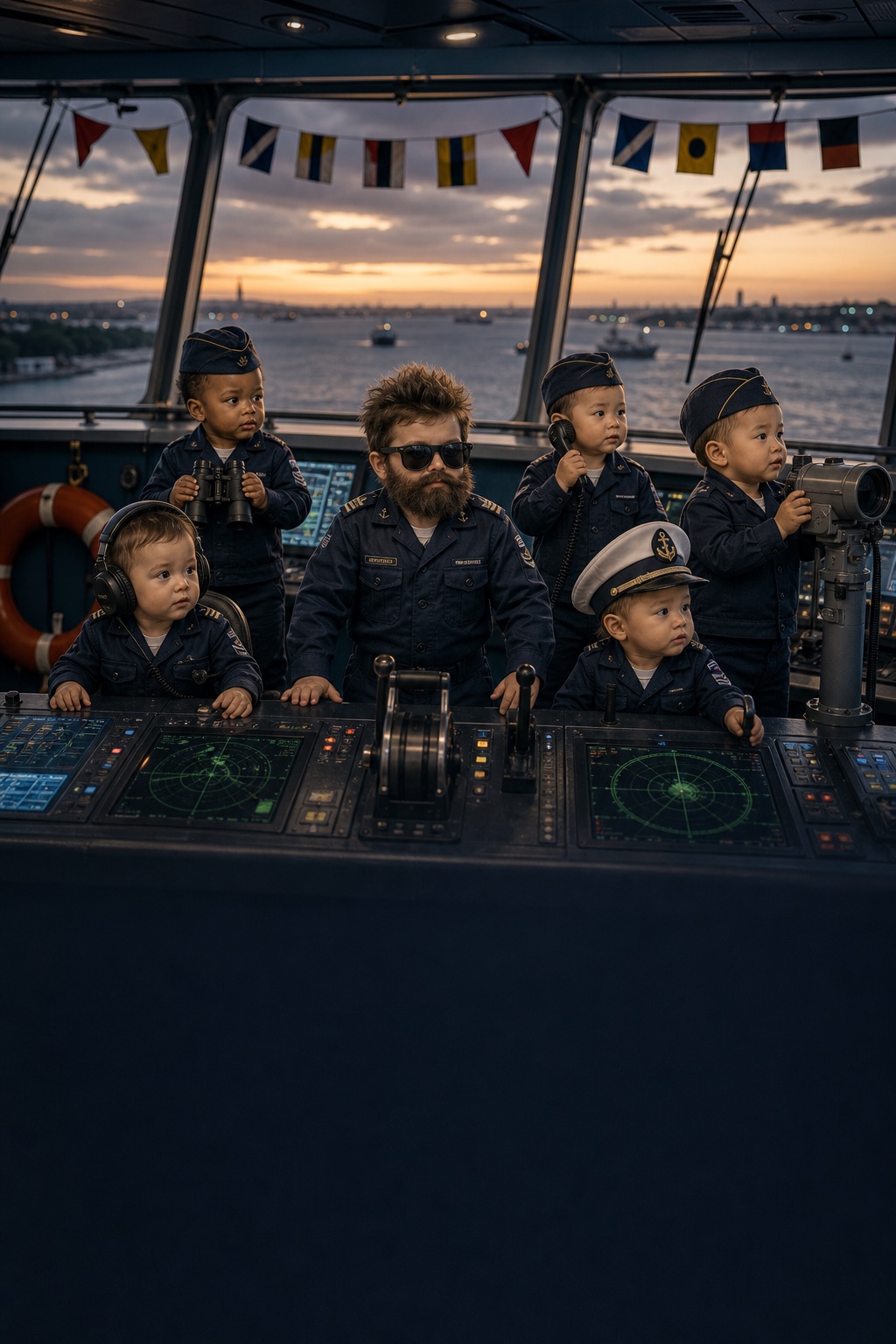
Sea lanes, mines, missiles, diplomacy, and tired people standing watch while history keeps moving.
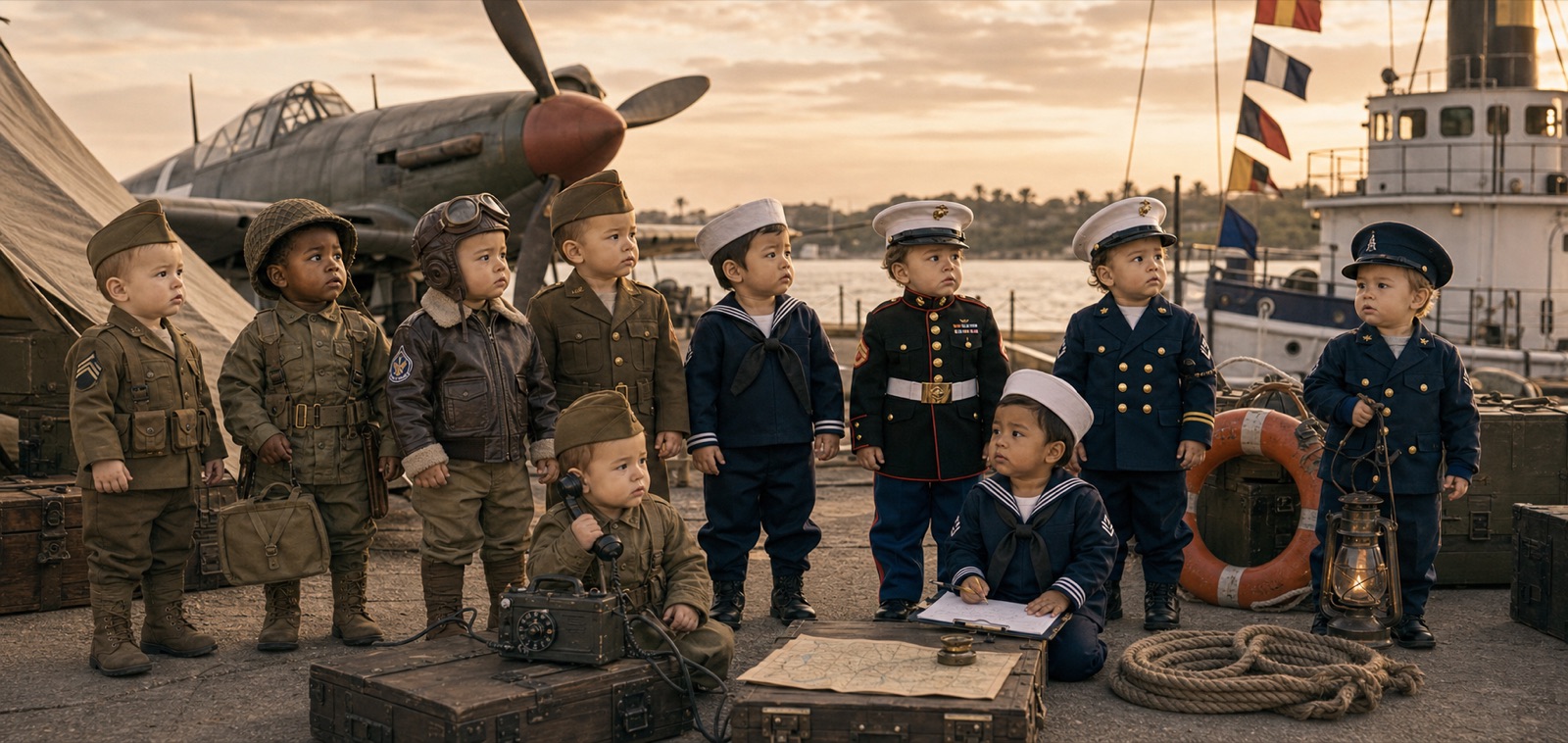 Archive Preview
Major Conflicts
The long file is still in the cabinet.
Open the full war-by-war archive when you want dates, cost notes, and the part history keeps refusing to summarize.
Open File
Archive Preview
Major Conflicts
The long file is still in the cabinet.
Open the full war-by-war archive when you want dates, cost notes, and the part history keeps refusing to summarize.
Open File
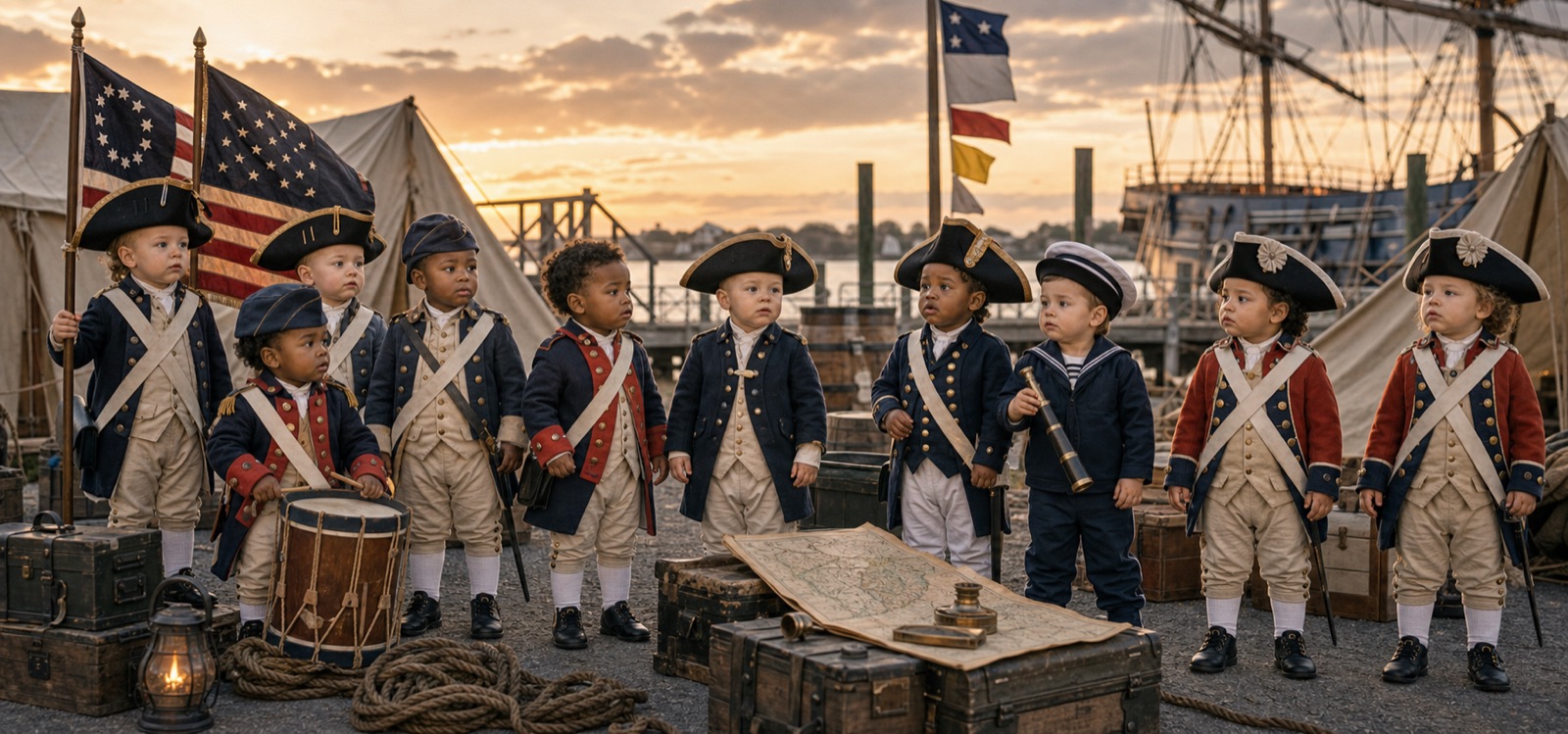 1775-1783
The first American service generation fought before the republic had a finished nameplate. Farmers, sailors, tradesmen, scouts, and militia became a fighting force under brutal conditions.
The cost: Families risked property, safety, hunger, and death to make self-government more than a theory.
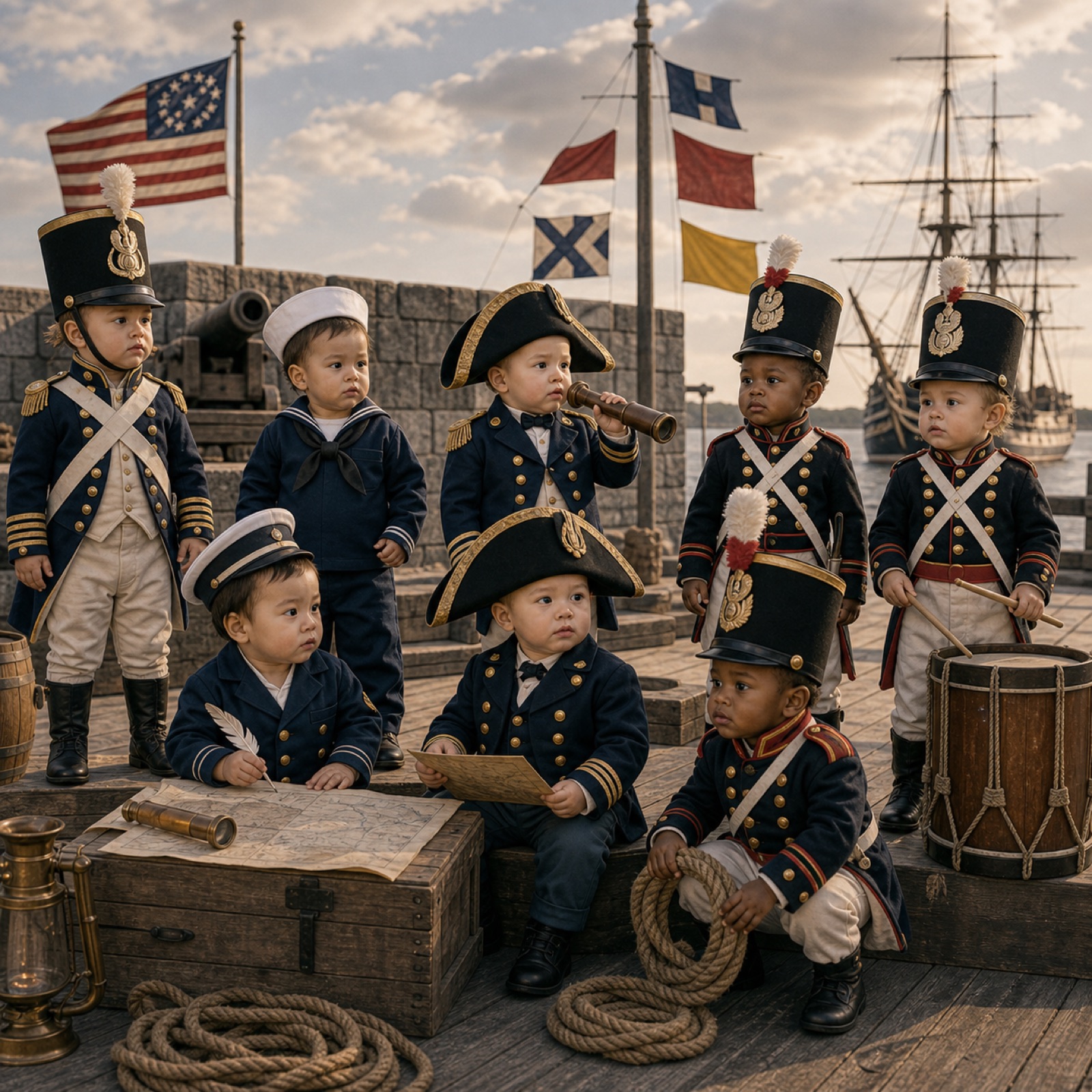 1812-1815
The War of 1812 tested the young nation's independence again, from border fighting and naval battles to the defense of cities and ports.
The cost: Soldiers, sailors, Marines, militia, families, and coastal communities carried the pressure of proving the republic could endure.
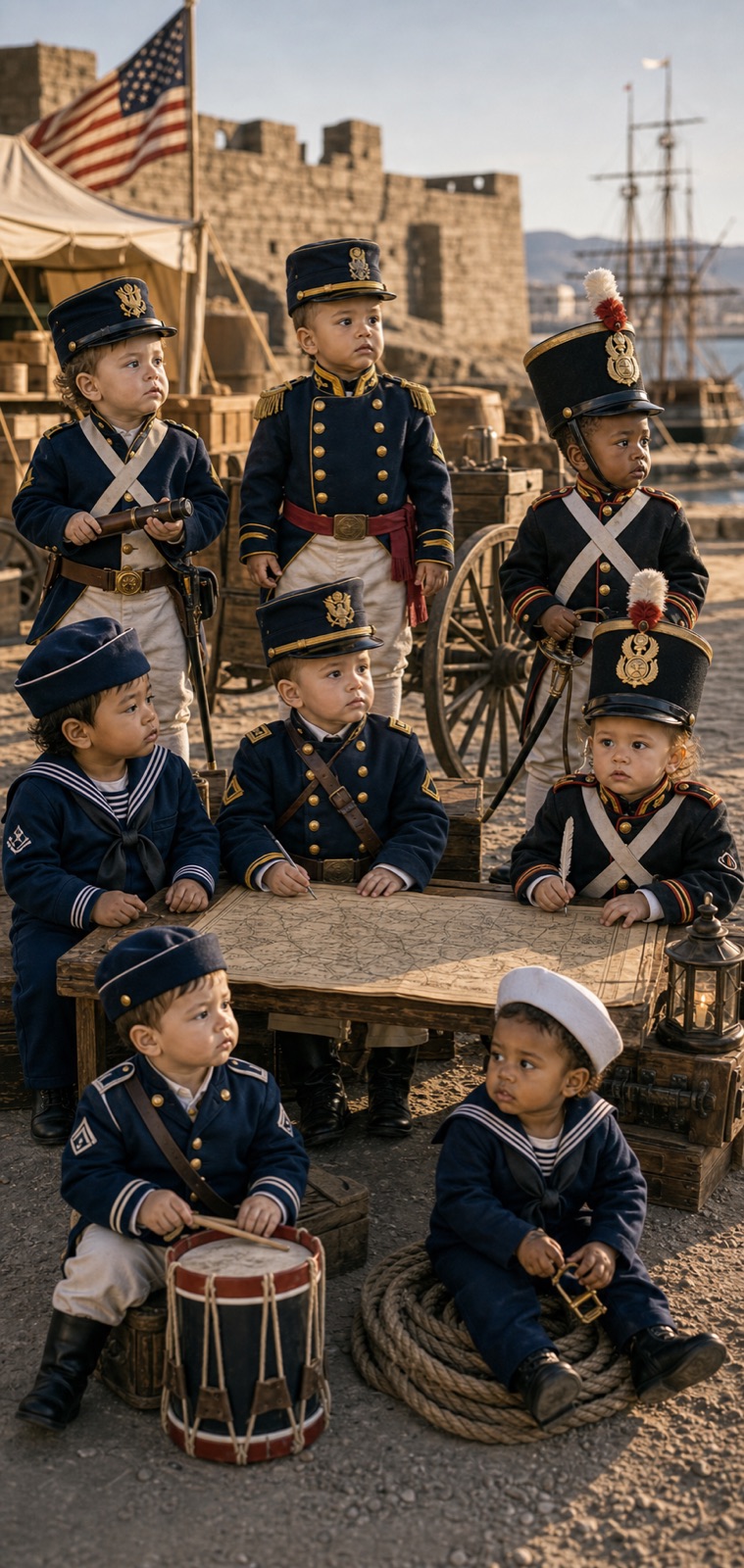 1846-1848
The Mexican-American War sent soldiers, sailors, Marines, supply crews, and medical teams into a fast-moving conflict across difficult terrain and contested coastlines.
The cost: Service members and families carried the burden of expansion, disease, distance, and combat in a war whose consequences shaped the map for generations.
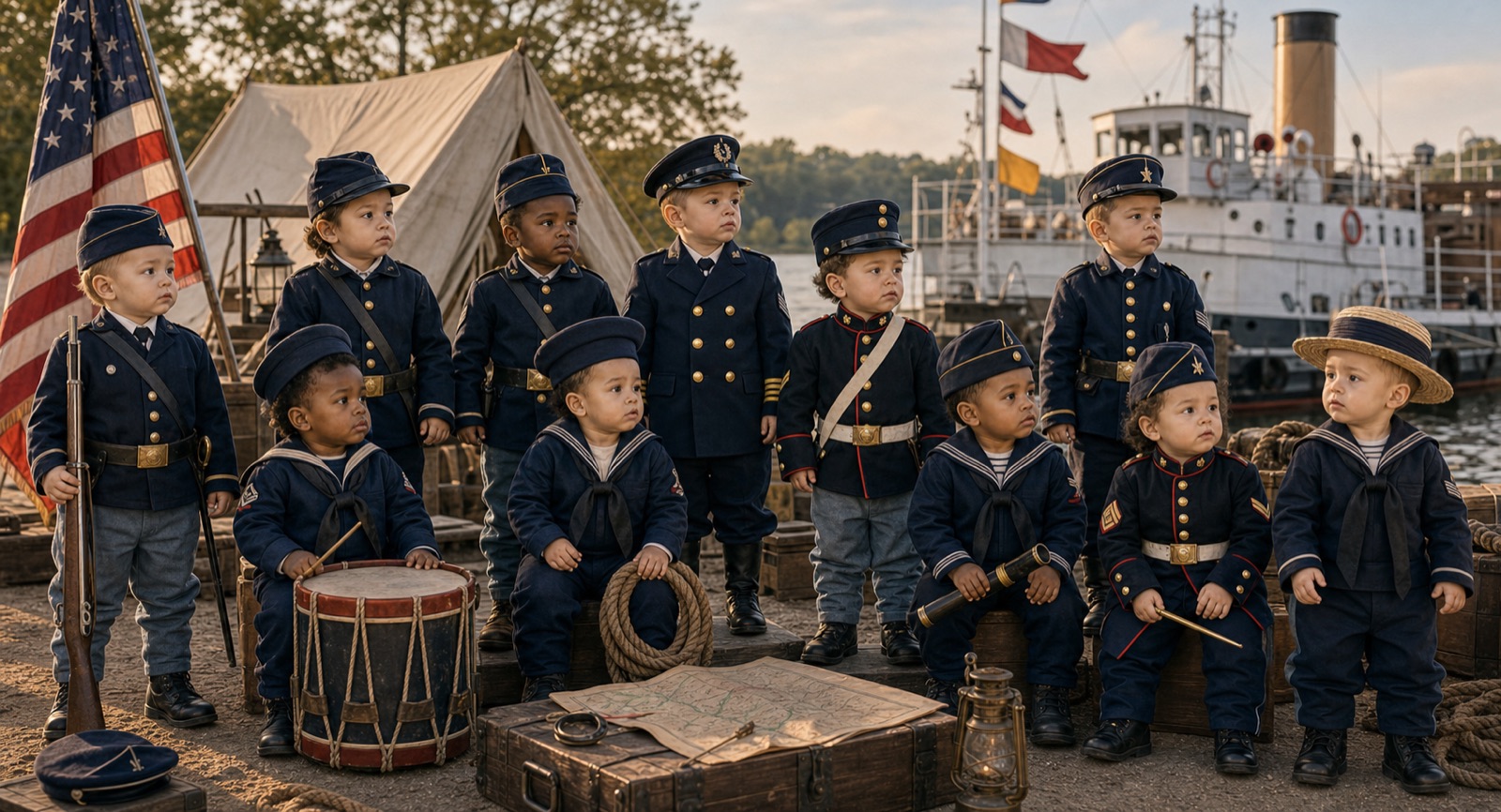 1861-1865
The Civil War tested whether the Union could survive itself. Service members fought across fields, rivers, rail lines, hospitals, and camps while the country faced the moral crisis of slavery.
The cost: A generation carried wounds that reached far beyond battlefields, preserving the Union at staggering human loss.
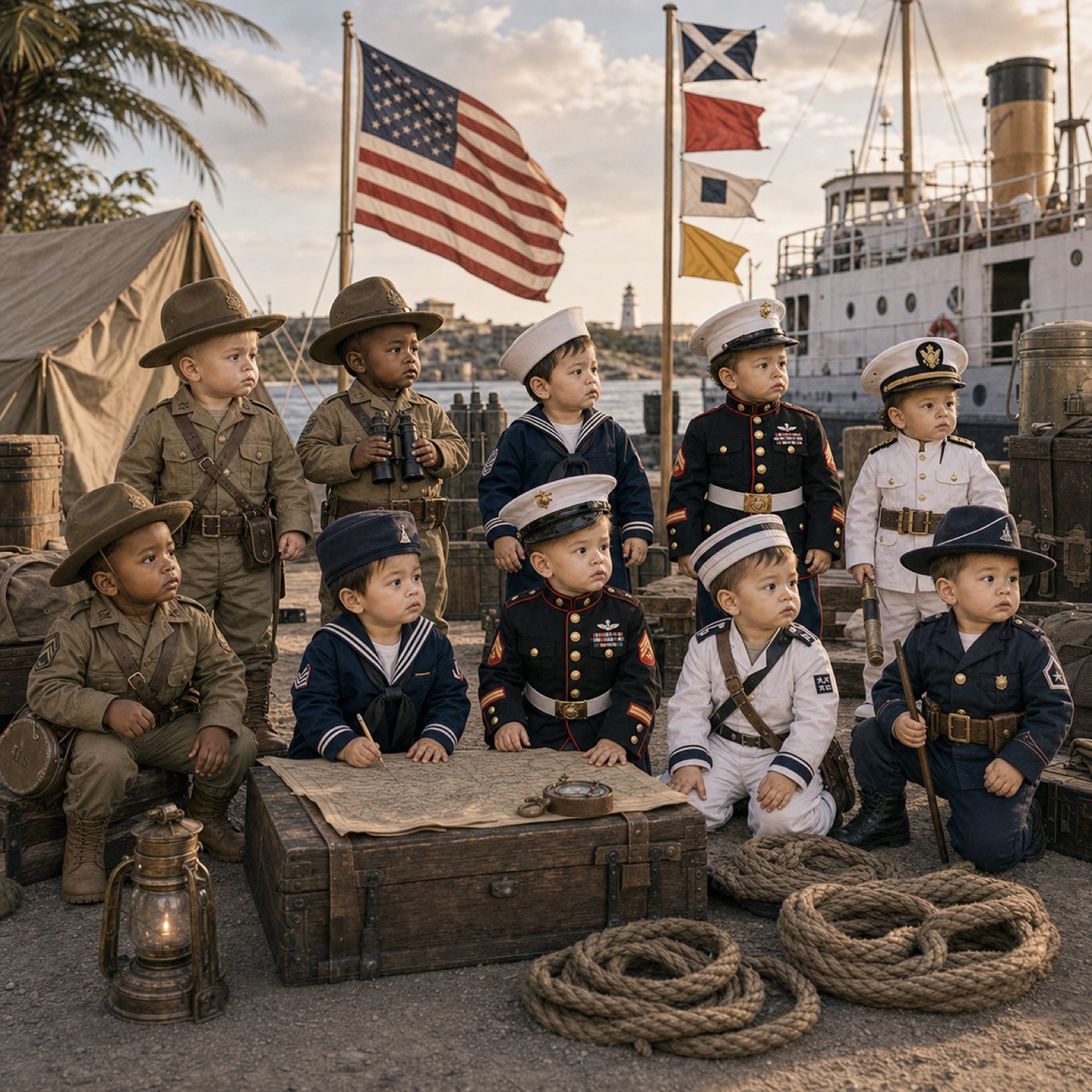 1898
1898
The Spanish-American War pushed American forces into a short, sharp conflict across seas, ports, camps, and disease-heavy staging areas.
The cost: Service members faced combat, heat, illness, and sudden overseas responsibility as the country stepped onto a larger world stage.
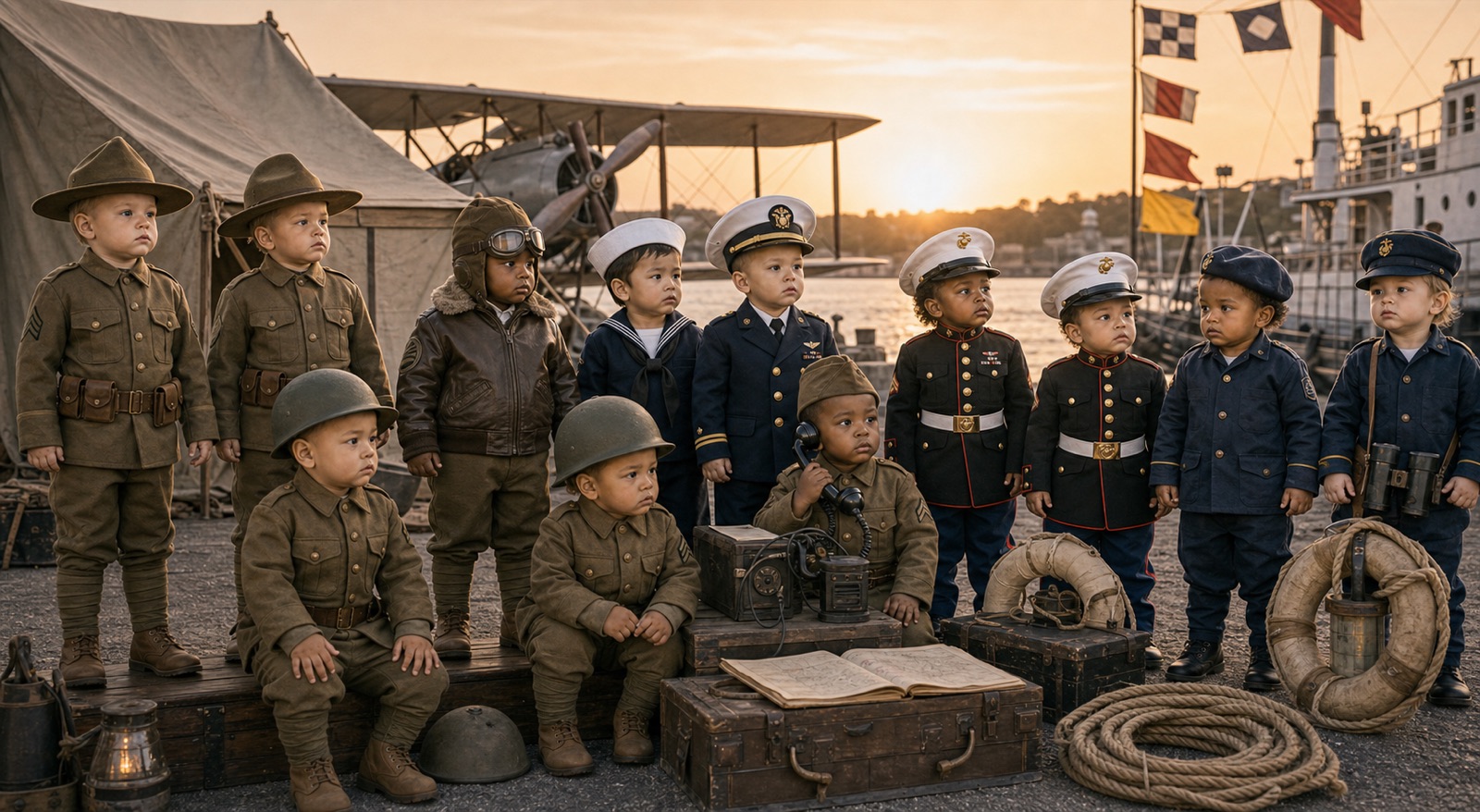 1917-1918
American troops entered a mechanized war of trenches, artillery, gas, and mass mobilization. Signals, medics, infantry, sailors, and support crews helped turn exhaustion into momentum.
The cost: Young Americans stepped into a war already scarred by millions of losses and brought home the trauma of modern combat.
1941-1945
World War II demanded a whole-nation response across Europe, the Pacific, the Atlantic, factories, farms, shipyards, flightlines, code rooms, and beaches.
The cost: Service members and families endured separation, rationing, danger, discrimination, and loss to defeat fascism and protect the free world.
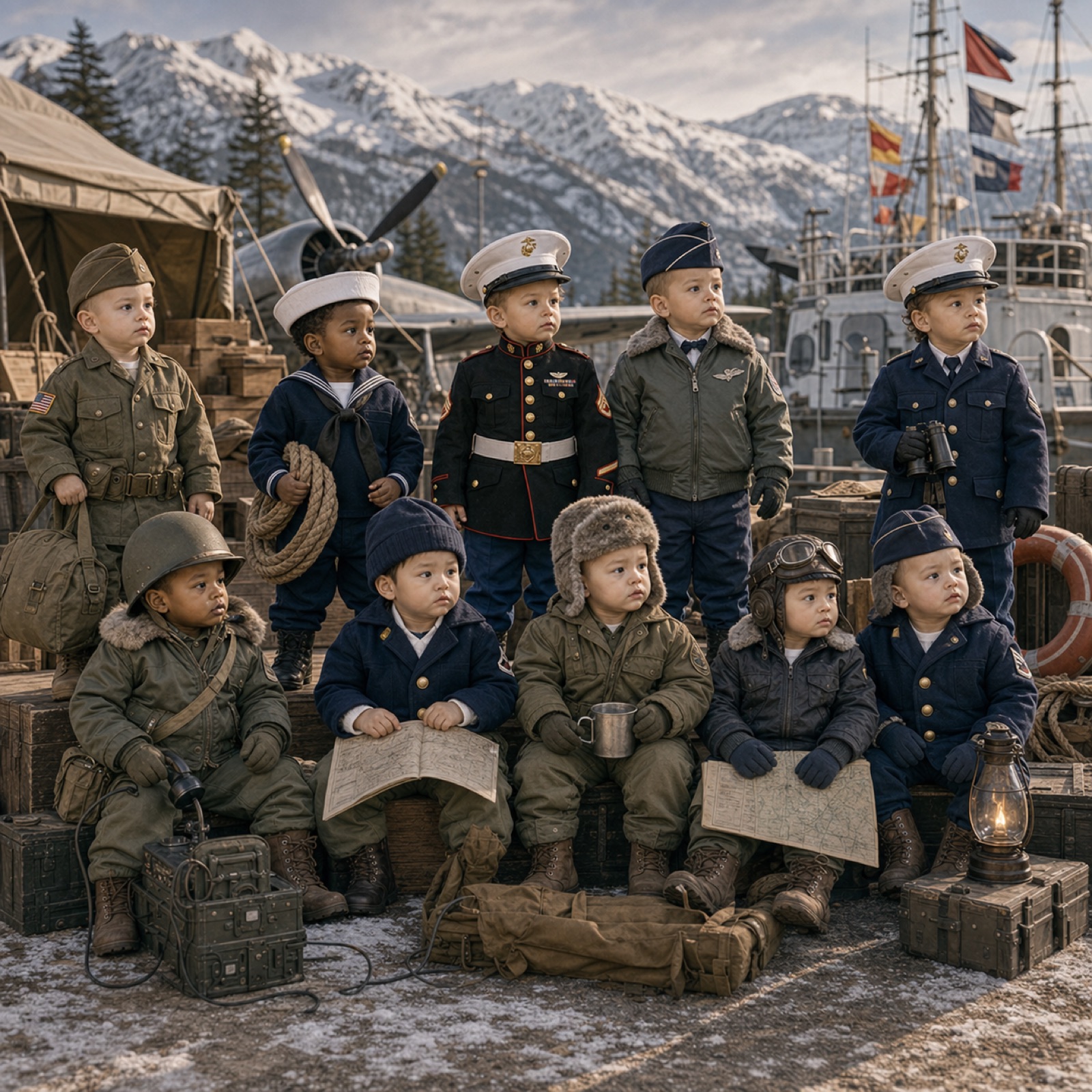 1950-1953
The Korean War asked Americans to fight in bitter cold, harsh terrain, and a conflict many back home struggled to understand. Supply, medicine, infantry, airpower, and sea power all mattered.
The cost: A generation held the line in brutal conditions so freedom could survive on the Korean Peninsula.
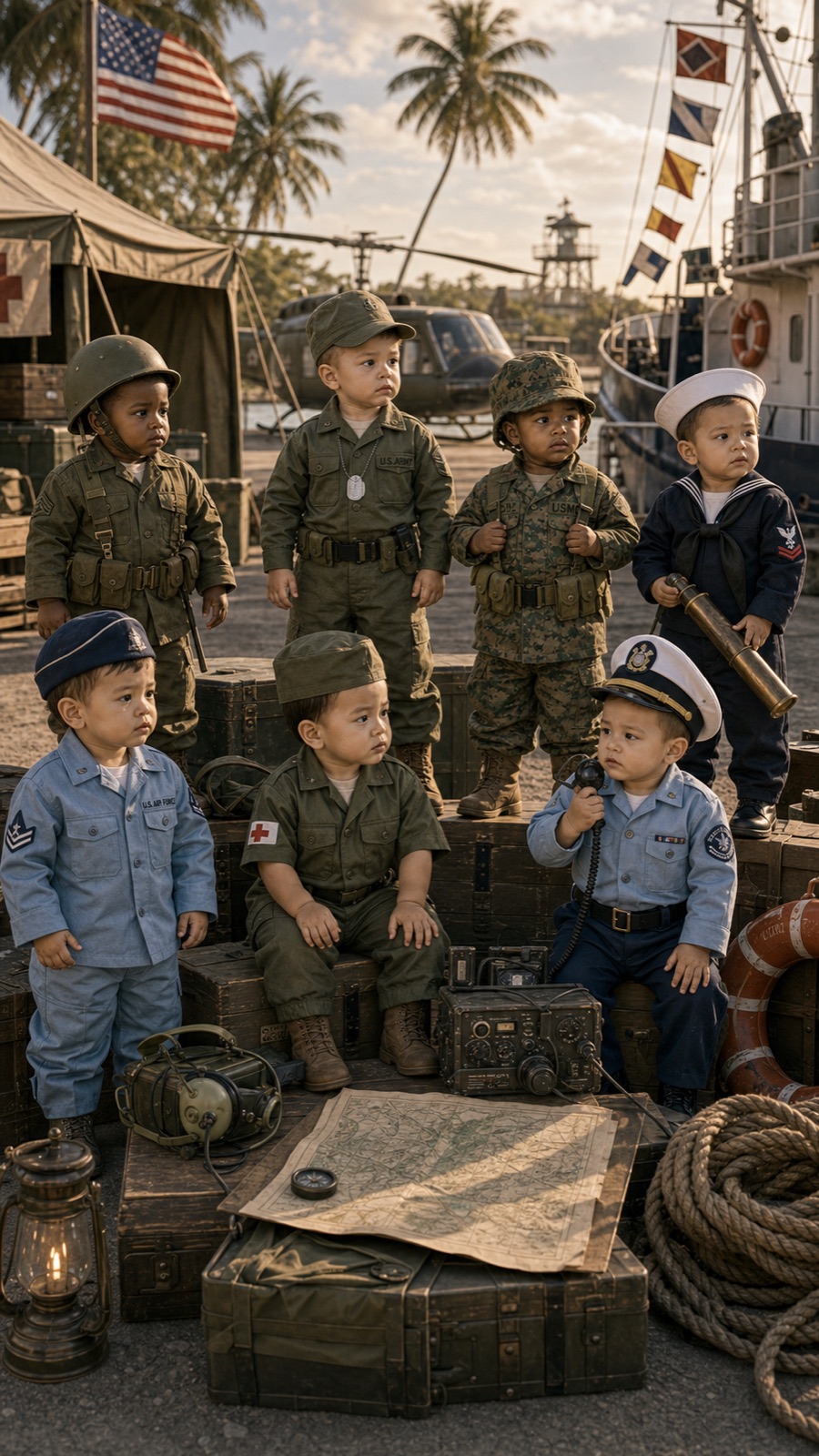 1955-1975
Vietnam placed service members into jungle, air, river, hospital, and maintenance missions under impossible pressure at home and abroad. Courage often looked like getting one more person out alive.
The cost: Many returned to a divided country while carrying visible and invisible wounds that lasted for decades.
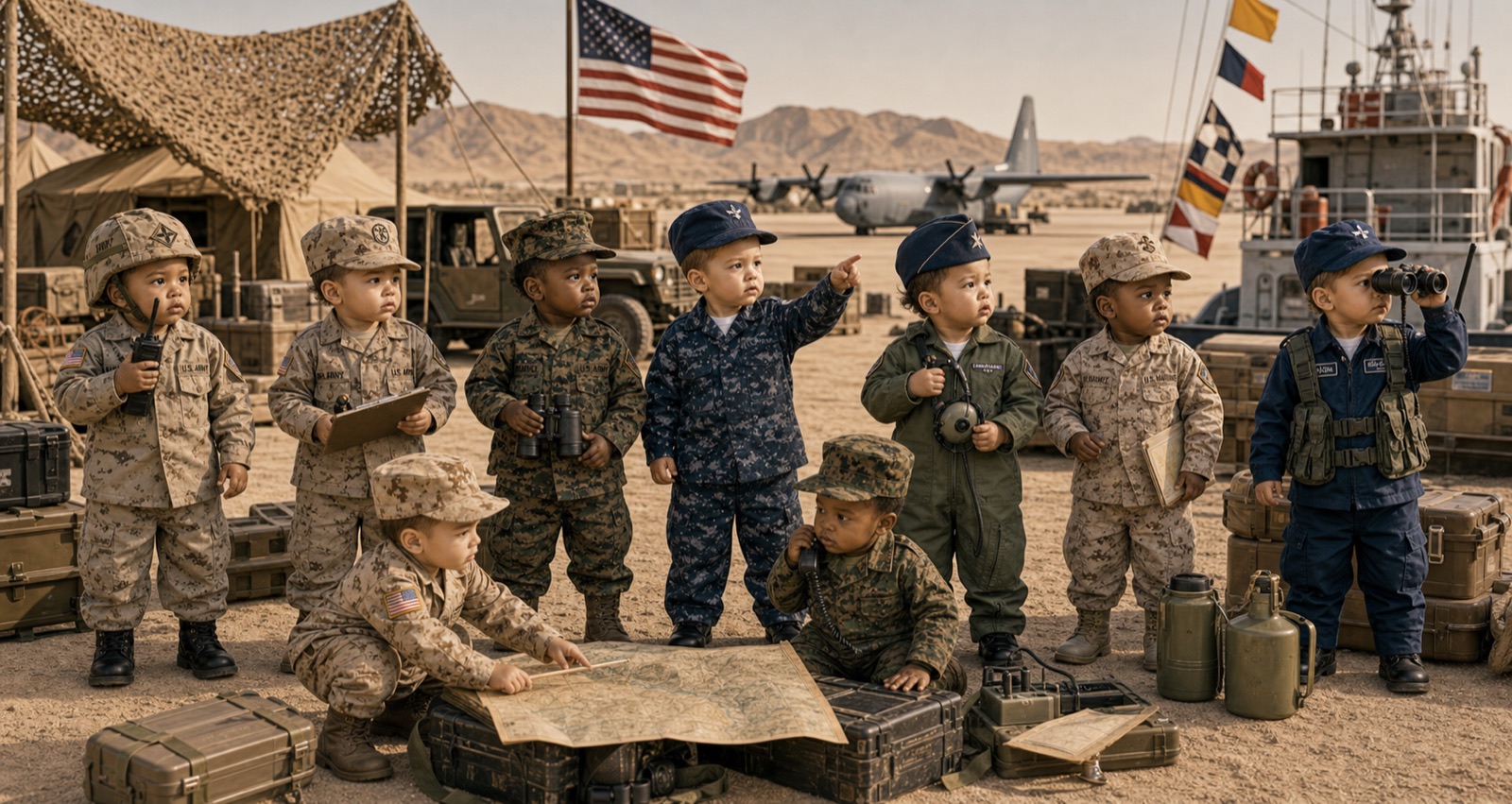 1990-1991
The Gulf War showed the power of joint operations: armor, airpower, sea lift, logistics, communications, and coalition discipline moving at modern speed.
The cost: Service members deployed into uncertainty, chemical-threat alarms, desert conditions, and the lasting health burdens many carried home.
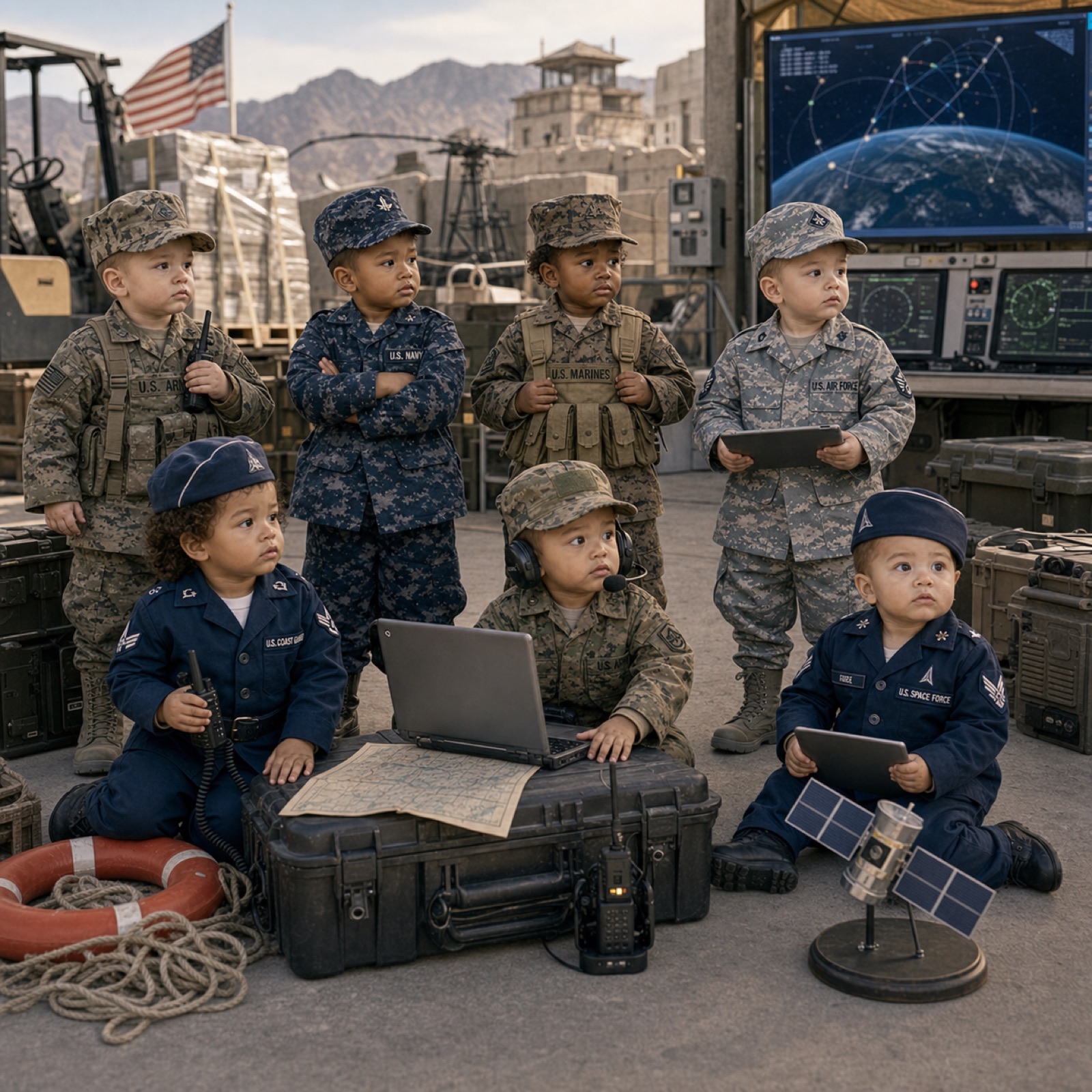 2001-2021
Afghanistan, Iraq, counterterrorism operations, intelligence work, special operations, airlift, medical evacuation, and support missions reshaped what deployment meant for a generation.
The cost: Repeated rotations, family strain, moral injury, and quiet daily sacrifice became part of the modern service story.
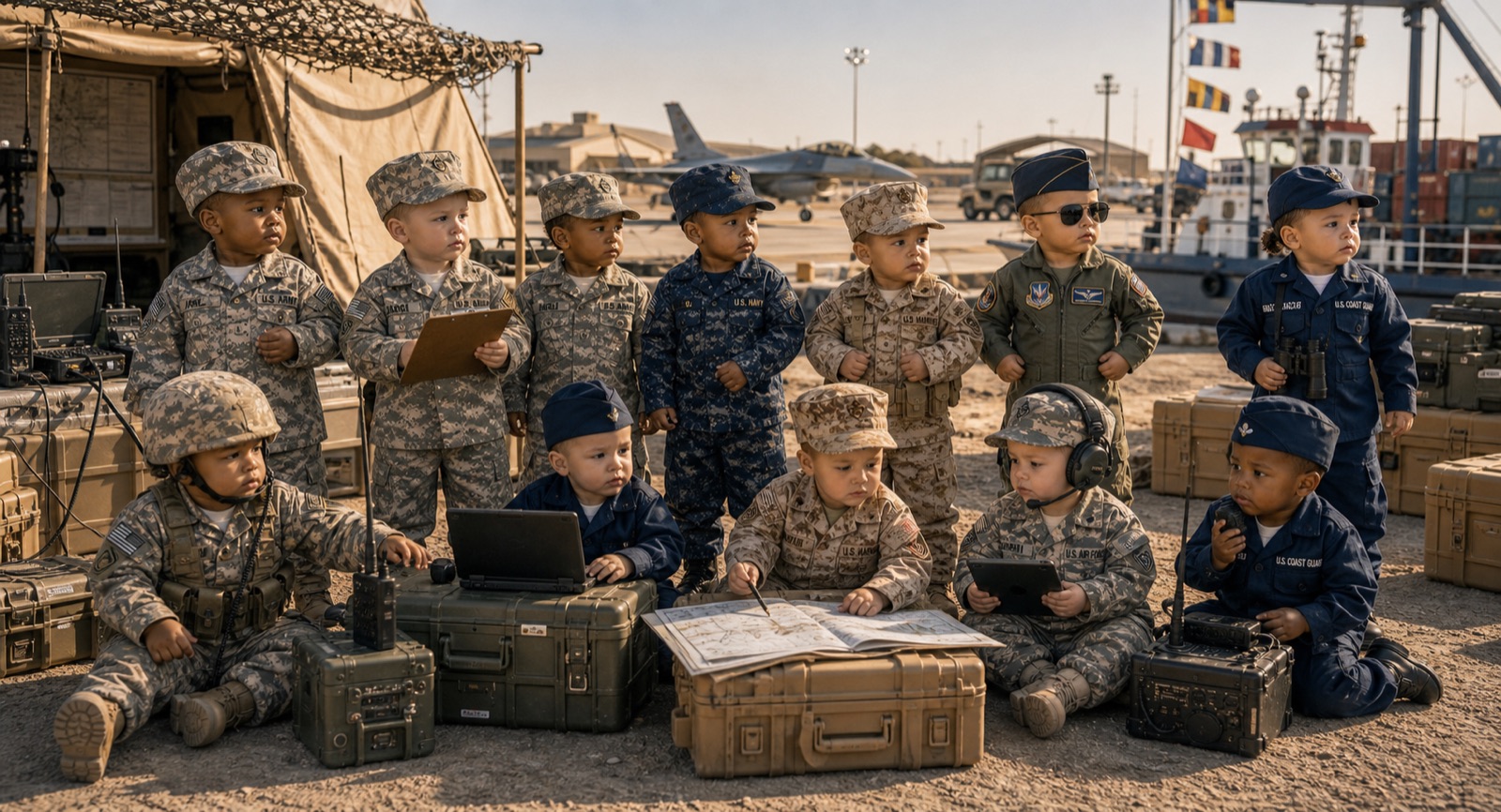 2003-2011
The Iraq War pulled service members into invasion, counterinsurgency, convoy security, aviation, intelligence, logistics, medical evacuation, and rebuilding missions under relentless pressure.
The cost: Repeated deployments, roadside threats, long separations, and invisible wounds became part of the service story for a generation.
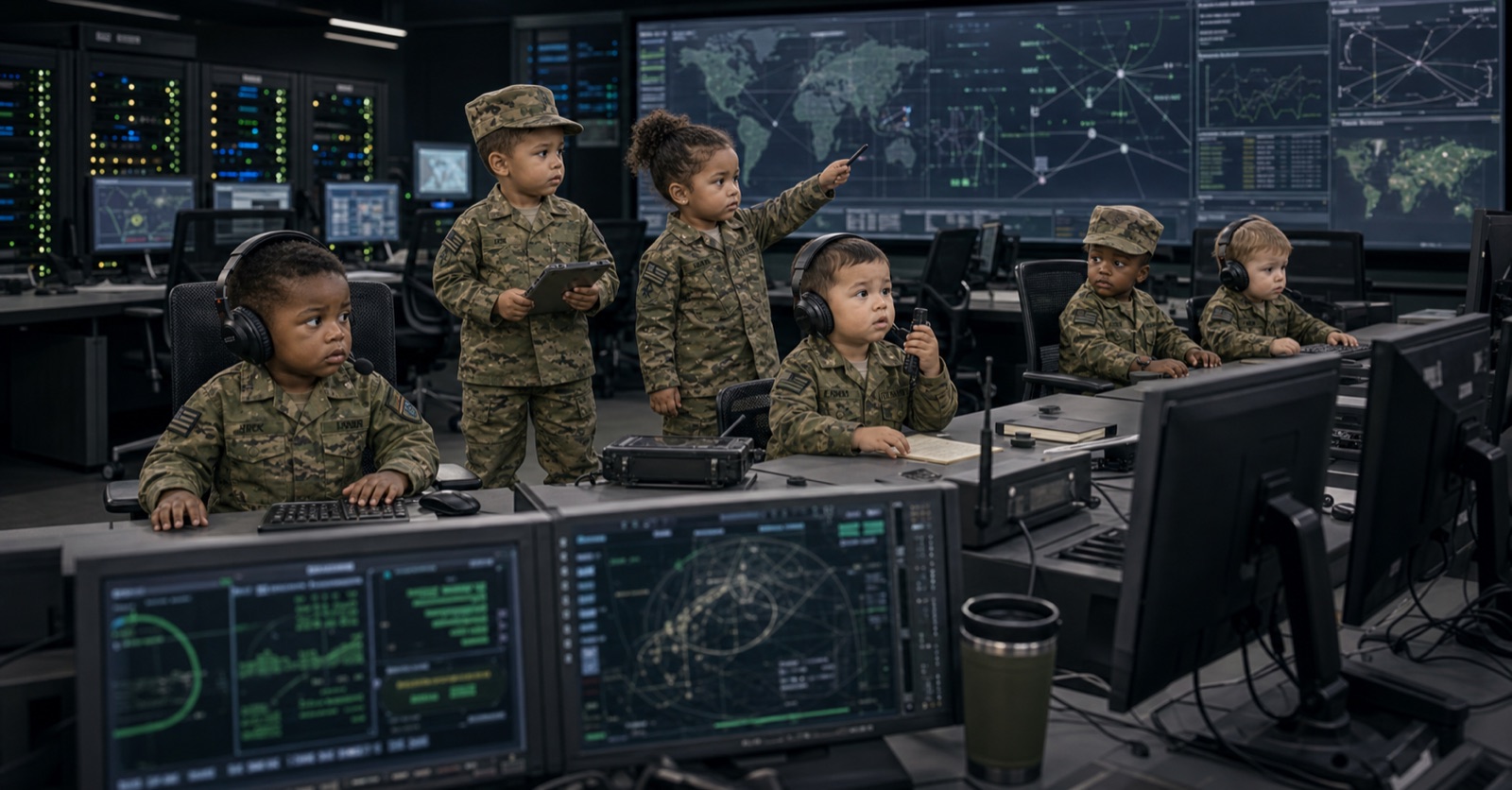 2001-Present
The modern watch is broader than a single battlefield: cyber defense, space systems, disaster response, deterrence patrols, humanitarian logistics, and the daily work of keeping threats away from home.
The cost: Service members and families carry uncertainty even when the mission never makes the evening news.
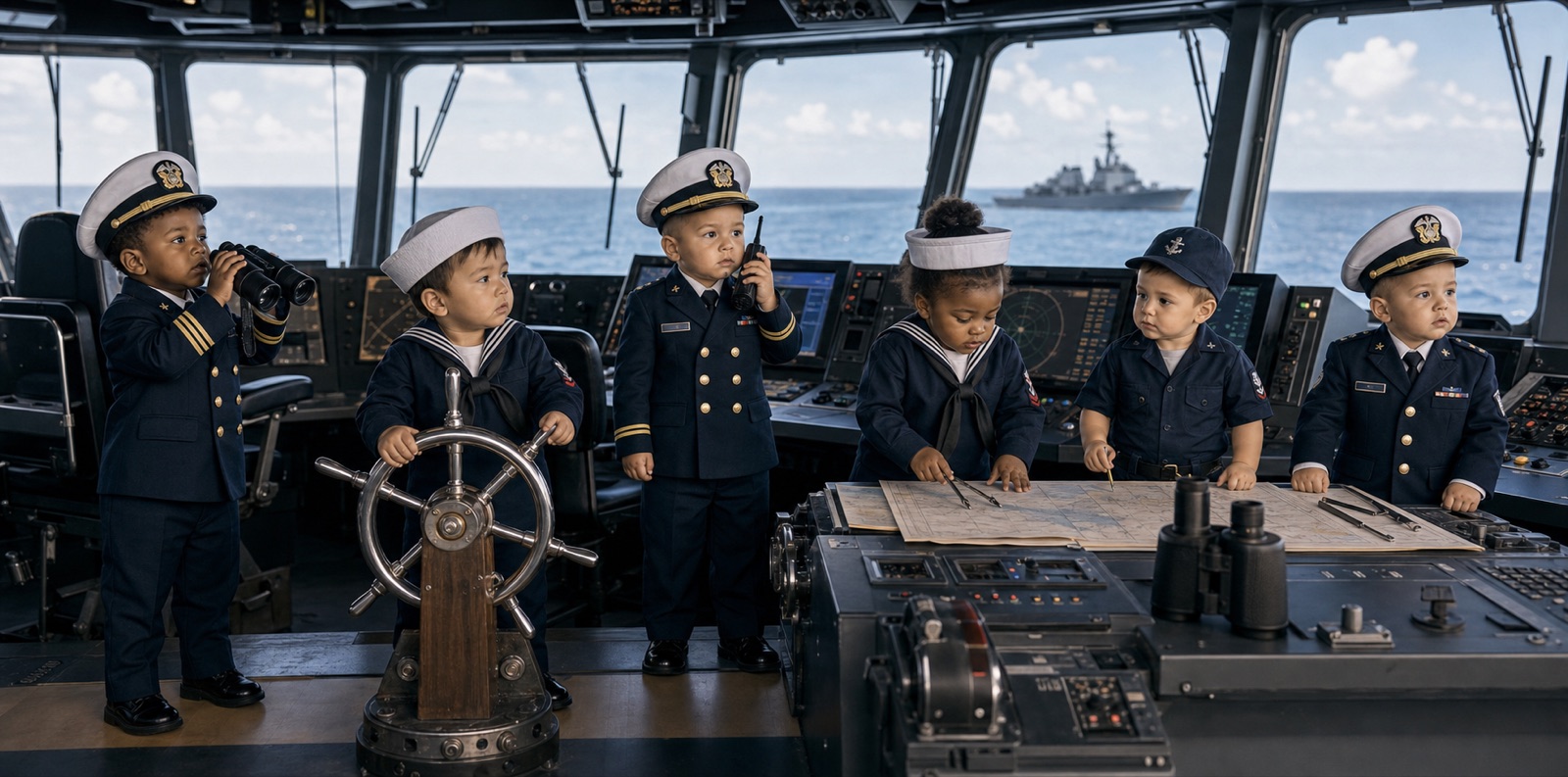 2026
2026
Current reporting and CENTCOM releases place U.S. personnel around Iran and the Strait of Hormuz in blockade, maritime security, self-defense, air, sea, logistics, and diplomacy-adjacent operations.
The cost: The newest generation stands watch under missile, mine, drone, cyber, and escalation risks while families wait for the next update.
Current-event context is treated as a live file and should stay sourced. See CENTCOM's May 2026 press releases and Associated Press reporting on Iran and Strait of Hormuz developments.
Era Locker
Campaign-Matched Gear
Pick the era. Raid the supply shelf.
Campaign rails stay ready for the historically specific shopper with suspiciously strong mug opinions.
Shop Eras
The character can be absurd. The respect for people who train, deploy, lead, and return to do it again should not be.
Memorial Day leads the page because the cost of service is not a punchline.
Every branch deserves room here, from the oldest uniforms to the newest acronyms.
Behind every deployment is somebody keeping the lights on, the kids moving, and the group chat barely operational.
The satire is aimed at power, bureaucracy, and the strange public theater around it. The people doing the work get the salute.
 Origin Dossier
Public Remarks. Public Satire.
The field file starts at Quantico.
Open the source note for the public remarks, official transcript, and required paper trail.
Open Dossier
Origin Dossier
Public Remarks. Public Satire.
The field file starts at Quantico.
Open the source note for the public remarks, official transcript, and required paper trail.
Open Dossier
September 30, 2025. Marine Corps Base Quantico. Pete Hegseth, styled in the public transcript as Secretary of War, addressed hundreds of senior military leaders in a speech about standards, readiness, grooming, and what he called warrior ethos.
The phrase that left the room was blunt: "No more beardos." Beardo is Diaper Diplomacy's field-file response to that public moment: a character built from public remarks, military pageantry, and the kind of briefing-room language that always arrives wearing boots.
This page is satire and commentary responding to public remarks by a public official. It is not affiliated with, endorsed by, or speaking for the U.S. military or any government agency.
Context can be cross-checked against the official War.gov transcript and War.gov summary.
Part tribute, part press-room myth, part grooming waiver that somehow made the morning brief. The uniform gets respect. The bureaucracy gets processed accordingly.
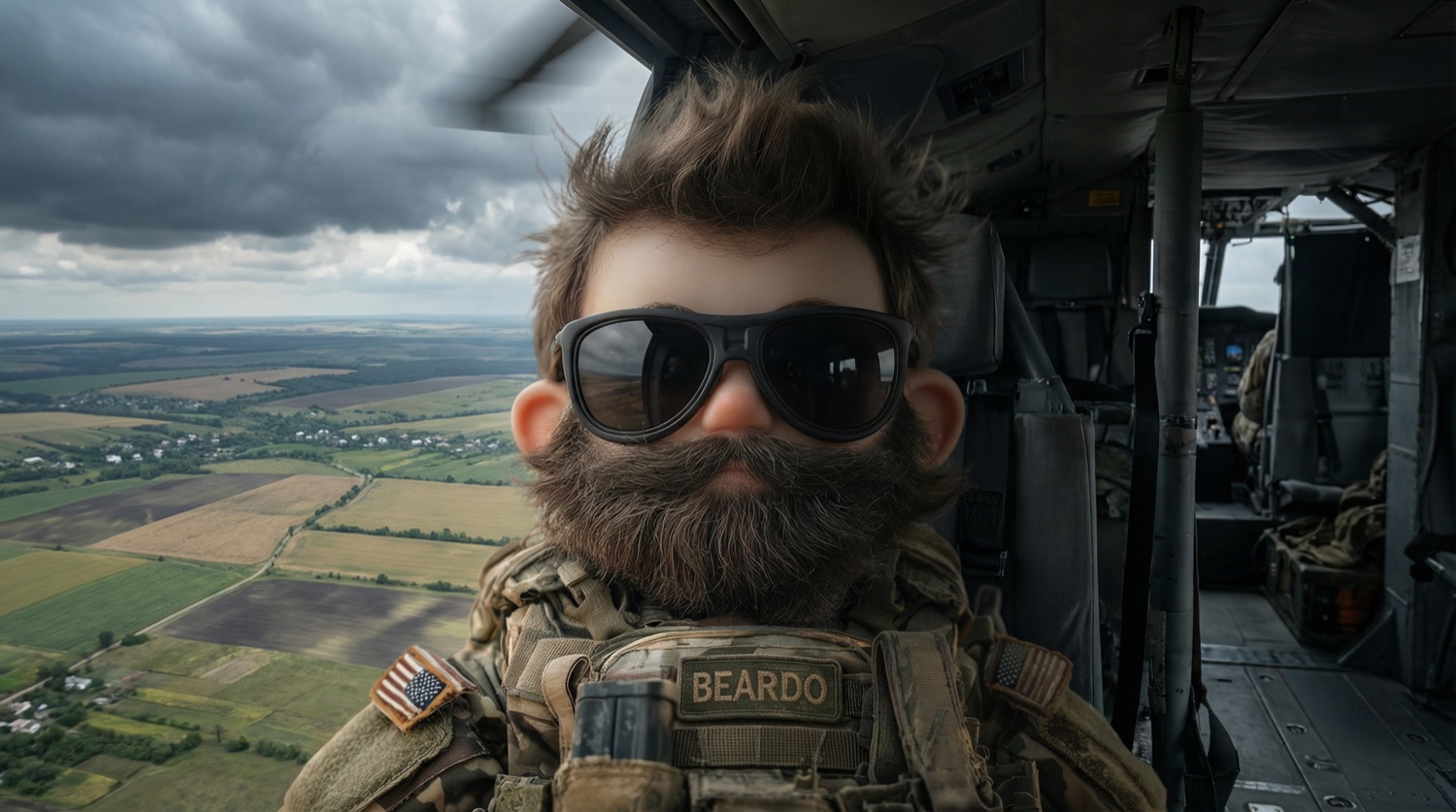 Field Issue
Beardo Collection
Out of regs. In the cart.
Mugs, hoodies, magnets, desk gear. The quartermaster has questions and no authority.
Shop Gear
Field Issue
Beardo Collection
Out of regs. In the cart.
Mugs, hoodies, magnets, desk gear. The quartermaster has questions and no authority.
Shop Gear
When a new video drops, the Daily Briefing lands here first: episode links, featured files, field notes, and the occasional roast that was probably supposed to stay in draft.
More military babies are coming as the image library grows. Every new branch image gets a place in the file.